26/27 Punt Blocks (Yahoo)
Sign up here to gain access to all of Elite Fantasy Basketball’s league-winning content: SUBSCRIBE
Click here for a full list of all the content that has been released and will be released this draft season: 26/27 Draft Season Content Tracker & List of New Features
The Punt Blocks Strategy
The punt blocks build isn’t nearly as well-known or as popular as builds like punt FG% or punt FT%. It’s a championship-winning strategy when implemented properly, but it’s usually not the first choice of many fantasy managers. Expect that to change over the next decade. In fact, this could end up being the go-to punting strategy for a majority of fantasy players as soon as next season. All it will take is one more jump from Victor Wembanyama to make this build arguably the most attractive build in category leagues. Given what we saw from the MVP favorite over the second half of the 2025-2026 regular season and during the Spurs’ run to the finals, the leap could come very soon. While the Frenchman is going to dominate the fantasy landscape for the next decade, the nature of his game makes the teams built around the big man easier to attack than teams built around the league’s other top fantasy options. There is no way to turn Nikola Jokic or Shai Gilgeous-Alexander into just another first-round player. The lines the two MVPs produce are too balanced. At least for now, you can nullify much of the advantage the Wembanyama-led team has on most of the league by ignoring swats. The center will still be a top-end fantasy weapon when blocks don’t matter, but he will be much less scary to face off against if your path to victory isn’t dependent on winning swats. To give you an idea of how effective punting blocks is at taking the former first-overall pick down a notch, let’s take a look at Wembanyama’s 2025-2026 final per-game rankings with and without blocks.
Nine-category: 2
Nine-category without blocks: 11
Eight-category: 2
Eight-category without blocks: 12
Punting blocks is not just about neutralizing Wembanyama. This is a classic build that has become even more effective as the NBA has transitioned to a more perimeter-oriented league. With very few teams running double-big lineups these days, finding quality sources of swats has become more difficult than ever. If you are working with a different build that is aiming to win blocks consistently, you will be competing with every other team in your league for a very small group of players who often don’t produce a ton of value outside of swats. When you pick up a player who can help lock up the category, you are often putting multiple categories at risk.
Punt blocks can be especially lethal in eight-category leagues. Turnovers not counting means that five of the eight remaining categories are categories that guards and wings tend to excel in. That unbalanced setup strengthens all small-ball builds. While punt FG% tends to be the go-to for most fantasy players looking to build a small-ball team in eight-category leagues, you shouldn’t commit to that strategy without first sitting down and figuring out whether a punt blocks setup would be a better approach. There are strong arguments on both sides of that debate. Punt FG% has a higher ceiling because it increases the value of guards more than the punt blocks strategy does. However, it is also a harder strategy to pull off and comes with a lower floor. That lower floor is due to the popularity of punt FG% and the lack of obvious big man targets for the build. In most competitive 12-team leagues, there will be three or four punt FG% teams competing for the same small group of bigs. All it will take is one unfortunately-timed big man run to put you in a very tough spot. When you punt blocks, missing out on bigs is less of a worry. It’s rare for a draft to contain more than one or two punt blocks teams, so you should be able to get your top big man targets around their ADP.
Even if you don’t plan on utilizing this strategy, you should familiarize yourself with it. It is a strategy that works very well as a mid-draft pivot. The early rounds don’t always go your way, so it’s important to have a backup strategy or two going into your draft. Punt blocks tends to be one of the easier builds to switch to after the first few rounds because there are not a lot of early-round options that make a switch to the strategy inadvisable. It pairs nicely with almost all of the first-round guards and is only a no-go zone if you come away from the first two rounds with one or more of Wembanyama, Anthony Davis, Scottie Barnes, or Chet Holmgren on your roster.
Correlation Analysis And The Build’s Natural Strengths And Weaknesses

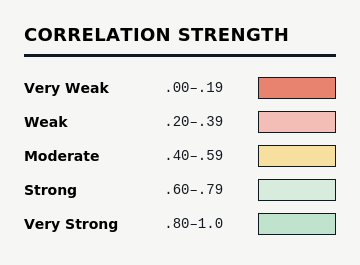
The correlation coefficients show us why punt blocks can be such an effective strategy when properly implemented. Blocks has a negative relationship with FT%, points, threes, assists, and steals. That means that when we pass on swats, we will be strengthening ourselves in those five categories. That makes sense since outside of a small handful of elite bigs, most of the shot blockers we will be passing on struggle in some, if not all, of those categories. The opposite is true for FG% and rebounds. Blocks has a positive relationship with both (in this case, positive is bad). When we pass on the league’s dominant rim protectors, we will be making it more difficult to win FG% and rebounds consistently since those shot blockers usually do good work in all of the big man categories. Because of this, in order to find enough FG% impact and rebounds, we will need to draft some bigs who average 1.0+ BPG. And that’s fine. We have to do something similar when we punt FG% in order to find enough rebounds and blocks. As is the case when we punt FG%, we need to make sure the bigs we are targeting are the right bigs.
It’s worth noting that the relationship between FG% and blocks weakened a notable amount last season. In 2024-2025, the R2 for blocks was 0.46. That dip means it was easier to find sources of FG% impact that did not have a significant amount of value tied up in blocks last season than it was the year before. This shouldn’t change how you approach building your punt blocks squad, but it is something we should keep an eye on. If FG%’s and blocks’ relationship continues to weaken, this strategy will become even easier to pull off.
While the relationship between blocks and turnovers is weak, we will need to keep an eye on our turnovers when punting blocks in a nine-category league, especially if we begin this build with a first-round pick with an ugly turnover rate. Since most guards gain a significant amount of value in this build, we will be targeting plenty of them, and that usually leads to issues with the category. Usually, but not always. As evidenced by the sample teams, it is possible to finish the draft in a strong position in the category if you make some picks with turnovers in mind. You’re not going to be as dominant in the category as a punt assists team will be, but an above-average finish in the category is doable when you punt blocks.
Where The Build’s Key Categories Are In The Draft
Any punt blocks team that wants to win a ring needs to make sure it finishes the draft in an excellent position in as many guard categories as possible, or at least in a position where it is only a strong pickup or two away from being where it needs to be. To end up in a great spot in points, FT%, and assists, you need to target all three categories early and often. The best sources of points are found inside the first two rounds, and almost all the best sources of points will be off the board by the end of round four. By the end of round seven, difference makers in the category will be very hard to find on Yahoo. In the later rounds, almost all of the decent sources of points come with some serious drawbacks. Assists dry up just as quickly. You’ll want to grab at least two strong contributors in the category during the first three rounds. Three strong dimes options by the end of round five is ideal. We have to be super aggressive with assists because by the end of round seven, almost all of the quality starting point guards will be off the board. The late-round assist sources are mostly low-upside options. FT% follows a similar pattern and is even more difficult to find late in drafts. You will want to grab at least two very strong sources of FT% during the first three rounds. FT% is not a category you can find in the final rounds. Very few late-round players get to the line enough to make a difference in the category.
Strong sources of steals are not quite as hard to find after the first few rounds as strong sources of points, assists, and positive FT% impact, but the difference in availability of steals and those other three guard categories isn’t as large this season as it has been in the past. This season, rounds one, two, and six contain most of the league’s top sources of steals on Yahoo. There are some potential difference makers in the category available late, but ideally, you won’t be dependent on those late-round steals sources because many of them are specialists who do very little outside of their best category. Try to come out of round four in an above-average position in the category and try to take at least one plus contributor in the category between rounds five and eight.
Threes is the one guard category that can be found throughout the draft. If you fall behind in triples early, don’t worry. There are plenty of high-3PG options available late. It’s also the easiest category to find on the wire. In a standard league, there will always be players available on the wire who average close to 2.5 3PG.
Due to this build’s natural weakness in the two remaining big man categories, you will need to keep a close eye on both FG% and rebounds throughout the draft, with rebounds being the more difficult category to manage. Strong sources of boards are not easy to find during the final handful of rounds this year, especially when we are ignoring players who have a lot of value tied up in swats. Most of this build’s top big man targets are located inside the first nine rounds. You’ll notice that most of the sample teams target FG% and rebounds very aggressively between rounds five and nine. In addition to making sure you grab a couple of quality bigs early, you’ll want to prioritize guards and wings who provide above-average boards for their position. You’ll find many such players highlighted in the round-by-round pick recommendations portion of this guide. FG% can be managed not only by picking up bigs who excel in the category and guards and wings who are efficient for their position, but also by avoiding major hits. That second bit is going to be very important during the second half of the draft when most of the guard options are notable drags on the FG% category. By avoiding major drags late, you will make up ground in the category when your opponents take those major drags.
Last Season’s Final Punt Blocks Rankings
2025-2026 Punt Blocks Rankings (9-Cat)
2025-2026 Punt Blocks Rankings (8-Cat)
First-round Building Blocks
The punt blocks build works well with almost all of the first-round perimeter options, but Nikola Jokic remains—by far—the best starting point for the strategy. Punt blocks squads built around Big Honey are unlikely to struggle with either FG% or rebounds and should finish the draft in a strong position in all the categories a punt swats team with championship aspirations needs to win consistently. In 2025-2026, Jokic averaged a flawless 27.7 PPG, 1.7 3PG, 12.9 RPG, 10.9 APG, and 1.4 SPG while shooting 56.9 percent from the field on major volume (17.4 FGA) despite playing at well below 100 percent for the final two months of the season. As incredible as those numbers are, they should not be considered his ceiling. Jokic was on pace to post the greatest fantasy season of the modern era before Spencer Jones stepped on his foot and ruined the Nuggets’ season and the season of countless fantasy players. While the Nugget is a dream centerpiece for this strategy, punt threes tends to be a slightly better spot for him in nine-category leagues. That build is usually a stronger option than punt blocks because the boost that low-3PG players receive in punt threes is larger than the boost that low-BPG players receive in punt blocks. When punting threes, it will be easier to find players who can outplay their draft position by multiple rounds. However, both builds can lead to championship-winning squads, and you won’t know which build is the right fit for your team without plenty of preparation. Elite Fantasy Basketball’s Team Building Tool is your best resource for figuring out which strategy to opt for. The tool makes mock drafts almost obsolete. Instead of spending half an hour on a mock draft that may or may not be representative of what you will see in a real draft, you can test different strategies in seconds using the tool.
While Shai Gilgeous-Alexander isn’t as strong a starting point for this build as Jokic, he is still head and shoulders above the rest of the first-round options. The difference between the two-time MVP and the rest of the non-Jokic first-round picks could be immense. It has been the last two seasons. During his second MVP-winning campaign, SGA was the only player who will be picked in the first round this season who came even somewhat close to matching Jokic when blocks were ignored. Last year, in 33.2 MPG, the Canadian produced a ridiculous 31.1 PPG on 55.3 FG%, 4.3 RPG, 6.6 APG, 1.4 SPG, and 2.2 TOPG while having the largest positive impact in the league on the FT% category (87.9 FT% on 9.0 FTA). There is no reason to expect a major decline in Gilgeous-Alexander’s numbers this year. He posted similar counting numbers in 2024-2025 when Jalen Williams played 69 games. SGA’s very average three-ball (1.7 3PG) is the lone iffy spot in his line. It’s also a weakness we do not need to pay too much attention to. This build rarely struggles with the category since it will be targeting plenty of high-3PG guards who receive notable bumps in value when blocks are ignored. It’s also not the end of the world if you finish your draft in a less-than-stellar position in the category since threes is the easiest category to find on the wire. Even in deep leagues, there will always be above-average sources of threes available.
Most Luka Doncic-led fantasy squads will choose to punt either FT% or FG%. Both builds are completely reasonable starting points for teams built around the Lakers’ superstar. However, this build should be considered as well. It’s a very easy strategy to pull off this season due to the placement of many of the build’s top big man targets. It also works well as a pivot for Doncic teams that miss out on their early-round punt FT% or punt FG% targets. That’s going to happen occasionally when you punt FT% with the Giannis Antetokounmpo team in your league a lock to deploy the strategy. You are even more likely to run into issues in punt FG% due to half of this year’s likely first-round picks being obvious starting points for the build. Luka is a great centerpiece for the punt blocks strategy because he will put up huge numbers in most of the categories this build needs to win consistently, while making the build’s natural weakness in boards much less of an issue. During his first full season in Los Angeles, the Slovenian averaged an unbelievable 33.5 PPG, 4.0 3PG, 7.7 RPG, 8.3 APG, and 1.6 SPG in 35.8 MPG. Doncic will come with minor FG% and FT% hits, but neither number will be a major issue for your team. What will be a problem is his turnover rate. Luka will average close to 4.0 TOPG this year. That is a tough number to offset in guard-heavy builds like punt blocks that will try to dominate all of the guard categories by picking up plenty of high-usage perimeter options. The superstar won’t lock you into the double-punt with turnovers, but he will force you to make multiple picks with turnovers in mind. Try to pair him with the handful of top-50 guards who average close to 2.0 TOPG.
Cade Cunningham no longer needs to be paired with the punt FG% build. He is still a drag on the category, but the hit that accompanies the Piston is very easy to offset, even in a build like punt blocks that will be passing on some of the league’s top sources of FG% impact. While leading Detroit to the East’s top seed, Cade averaged a well-rounded 23.9 PPG on 46.1 FG% and 81.2 FT%, 2.0 3PG, 5.5 RPG, 9.9 APG, 1.4 SPG, and 3.7 TOPG. Those starting their punt blocks squads with Cunningham will need to keep a close eye on both FT% and turnovers. Cunningham is not a bad free throw shooter, but he is a below-average source of FT% impact for his draft position. Cade-led teams should make sure that their next perimeter pick is a top-end contributor in the category. The point guard’s always-ugly turnover rate will be difficult, but not impossible to offset. Cunningham teams can finish the draft in an average position in the category if they avoid taking any other players who will average close to 3.0 TOPG this year. Ideally, the All-Star will also be paired with durable options. Cunningham is not a major injury risk, but he is a player whose career high in games played is 70.
Tyrese Maxey’s value is going to drop with Jaylen Brown and LeBron James now in Philadelphia. However, the dip will not be as large as most assume. The Sixer can lose a notable amount of usage and creation duties and still finish as a top-six punt blocks asset. He has plenty of room to fall. In 2025-2026, Maxey was more valuable than Luka Doncic in the nine-category version of punt blocks and finished miles ahead of the rest of the guards who will be selected after the top four this year. If Maxey ends up as a 24.0 PPG and 5.0 APG player instead of the 28.3 PPG and 6.6 APG player he was last year, he will still be a strong pick as early as pick five if paired with the punt blocks build. Maxey cannot bust on a per-game basis unless his minutes are cut. Given who his coach is, a major drop in playing time is very unlikely. From a category scarcity standpoint, it’s hard to do better than Maxey. The only first-round guard who will do more across points, assists, steals, and FT% this season is SGA.
Jayson Tatum is a viable starting point for most punting strategies. When healthy, the Celtic produces a line that does not contain any major holes. The well-rounded nature of his line provides you with plenty of team-building flexibility and allows you to hold off on committing to a build until later in the draft. Given how solid he looked after returning from his Achilles injury, the forward should be able to at least come close to matching his numbers from the 2024-2025 regular season. The last time Tatum was fully healthy, he produced top-10 value in this strategy by averaging 26.8 PPG on 45.2 FG% and 81.4 FT%, 3.5 3PG, 8.7 RPG, 6.0 APG, 1.1 SPG, and 2.9 TOPG. His elite out-of-position rebounding rate is especially useful here given the build’s natural weakness in the category. With Jaylen Brown now in a Sixers jersey, Tatum could top the points, threes, and assists numbers he posted two seasons ago.
Punt blocks teams built around Anthony Edwards won’t be quite as strong on a per-game basis as teams built around most of the other first-round options, but that’s going to be the case regardless of which build you choose. If you take Ant in the first, you are taking him not for his per-game output—which will be solid but not spectacular—but for the increased odds of having your first-round pick available for 75+ games next season. Edwards should be a top-15 per-game asset in this build who makes it easy to win points and threes consistently. In 2025-2026, he was a top-three source of points (28.8 PPG) and the sixth-best source of triples (3.4 3PG) in the league. The shooting guard was also an above-average rebounder for his position (5.0 RPG) and produced a useful number in steals (1.4 SPG). He won’t give us as much in assists (3.7 APG) or FT% (79.6 FT% on 7.2 FTA) as the other first-round guards, so if you do decide to build around Ant, make both categories a priority early. Quality contributors in both assists and especially FT% will be hard to find during the second half of the draft. Pairing Edwards with top-50 players who will play four games during the week that begins March 15th is essential. That week, Ant-led teams will only get two games out of their first-round pick.
The drop in Jalen Johnson’s block rate that was tied to the major increase in his offensive responsibilities makes this build a natural fit for teams led by the Hawk. The forward now has no value tied up in blocks and is capable of posting strong numbers for his position in every remaining counting category except turnovers. While leading Atlanta to the playoffs, Johnson produced a well-balanced 22.5 PPG on 48.9 FG% and 78.8 FT%, 1.7 3PG, 10.3 RPG, 7.9 APG, 1.2 SPG, and 3.4 TOPG. He should be paired with a durable elite guard. Johnson is a below-average contributor for his draft position in points and FT%, which are two of the categories that dry up the quickest. Like Cunningham, he should not be considered a particularly risky early-round pick, but he should not be considered particularly safe either. Johnson has played in at least 70 games in two of his last four seasons, but averaged just 46 games over the two seasons in which he failed to hit that mark.
Donovan Mitchell works very well in this build for the same reason Maxey does. The Cavaliers’ top option is an excellent pick from a category scarcity standpoint who comes with a top-six ceiling. In 2025-2026, Mitchell finished as the sixth most valuable player in both the eight- and nine-category versions of this build. During his latest All-Star season, the shooting guard averaged a flawless 27.9 PPG on 48.3 FG%, 3.2 3PG, 4.5 RPG, 5.7 APG, 1.5 SPG, and 2.8 TOPG while shooting 86.5 percent on his 6.1 FTA. Also, like Maxey, Mitchell can slip and still be a clear first-round player in this build. He was notably more valuable in punt blocks last season than Cunningham, Edwards, and Johnson. The only downside to grabbing the guard toward the end of the first is his two-game playoff schedule at the end of March. The Cavaliers will play just twice during the week that begins March 22nd. Mitchell will need to be paired with early-round players who play four games that week.
This strategy is one of the better options for Tyrese Haliburton-led teams because of the build’s natural strength in points. Teams built around the Pacer will leave the first round in a significant hole in the category. The last time we saw the 2024-2025 playoff hero, he averaged just 18.6 PPG. This build being a small-ball build that passes on some of the low-scoring bigs found in the early and middle rounds will make it easier to dig your team out of that hole. Assuming he’s close to 100 percent this year, Haliburton should finish among the league leaders in assists and threes while also producing helpful numbers in steals and especially turnovers. If you start your draft with the point guard, you should have no problem avoiding a double-punt with turnovers. In 2024-2025, he somehow averaged just 1.6 TOPG while finishing third in the league in dimes. In 2024-2025, Haliburton also averaged 3.0 3PG, 3.5 RPG, and 1.4 SPG while shooting 85.1 percent from the charity stripe.
Categories the Punt Blocks build will be aiming to win consistently: FT%, Points, Threes, Assists, Steals
Categories the Punt Blocks build will need to pay extra attention to: FG%, Rebounds, Turnovers
First-round targets: Nikola Jokic, Luka Doncic, Shai Gilgeous-Alexander, Cade Cunningham, Tyrese Maxey, Jayson Tatum, Anthony Edwards, Jalen Johnson, Donovan Mitchell, Tyrese Haliburton
Note: The list below is not meant to be a complete list of all the players who fit into this build. The round I recommend taking each player in is based on Yahoo Fantasy Basketball’s rankings and where I think each player will, or could be, available in a standard 12-team, nine-category draft. If you don’t see a player you think fits the build well, it may be because I think that player is badly overpriced on Yahoo. All numbers and rankings are from the 2025-2026 season unless otherwise noted.
R2) Karl-Anthony Towns – Towns is the top second-round big man target for the punt blocks build. When his very weak block rate (0.5 BPG) is ignored, he produces a line that comes with only one issue, and that issue won’t matter in many leagues. The NBA champion will drag down his fantasy teams’ chances in turnovers (2.5 TOPG), but he will give those same teams a better chance of winning the remaining seven categories. During the Knicks’ championship run, Towns averaged 20.1 PPG on 50.1 FG%, 1.5 3PG, 11.9 RPG, 3.0 APG, and 0.9 SPG while being an elite out-of-position source of FT% impact (85.8 FT% on 5.5 FTA). Every number in that line is average or better for a player with center eligibility. Towns did run into injury issues toward the end of his time with the Wolves, but has been very durable since joining the Knicks. He’s missed just 17 games since moving to the Big Apple two years ago.
R2) Austin Reaves – If the per-minute numbers that Reaves produced in 2025-2026 when LeBron James sat hold up in the shooting guard’s first season without the all-timer, the Laker will produce a line that looks very similar to the lines of all the first-round guards not named Shai Gilgeous-Alexander or Luka Doncic. The guard was notably more productive when he wasn’t sharing the court with James last year. With LeBron on the floor, Reaves produced 22.0 PP36 on 47.6 FG%, 2.5 3P36, 6.0 FTA36, 4.8 RP36, 4.0 AP36, and 3.0 TOP36. When James sat, those numbers jumped to 26.6 PP36 on 50.2 FG%, 2.3 3P36, 9.2 FTA36, 5.0 RP36, 7.5 AP36, and 3.1 TOP36. Given that Reaves is going to play close to 36 MPG this year, last year’s per-minute numbers without The King could end up being his 2026-2027 season-long averages. If he stays healthy, the potential All-Star will have an absolutely massive year. Reaves is a viable pick during the first half of the second round.
R2) Kevin Durant – If you come out of the first round with a young, durable player on your roster, put Durant near the top of your second-round wishlist. The future Hall of Famer is difficult to trust given his advanced age, but he’s still a very strong second-round option in almost every build, as long as you avoid taking any major risks until the second half of the draft. From a per-game standpoint, Durant is still capable of giving the punt blocks build almost everything it could ask for. He’s still one of the most efficient scorers in the league and is likely to produce elite numbers in two of the three categories that dry up the quickest on draft day. Points and FT% impact come off the board very early in drafts, and Durant should finish among the league leaders in both while hitting more than half of his shot attempts. During his first season in Houston, the veteran averaged 26.0 PPG on 52.0 FG% while knocking down 87.4 percent of his 6.0 FTA. He also gave his fantasy squads a useful 2.4 3PG, 5.5 RPG, 4.8 APG, and 0.8 SPG. Try to pair Durant with players who are above-average contributors for their draft position in both assists and steals. The forward’s dimes will drop this year with Fred VanVleet returning, and he has always been at least a minor drag on swipes.
R2) Amen Thompson – Amen is a reasonable third-round pick in 12-team leagues for any team built around two perimeter options. He can also work with an elite early-round big, but that pairing could lead to issues with points, threes, and FT%. While Thompson is a guard, from a fantasy standpoint, he should be viewed as more of a big who comes with some strong out-of-position contributions. The Rocket has more value tied up in the big man categories than in the guard categories. Thompson fits the build well due to the outstanding work he does in rebounds and FG%. During his borderline top-30 2025-2026 punt blocks finish, Amen averaged 18.3 PPG on 53.4 FG%, 0.3 3PG, 7.8 RPG, 5.3 APG, and 1.5 SPG while shooting 77.9 percent from the line. All of those numbers except for his assists are sustainable. Fred VanVleet’s return will lead to less time at the one for Thompson and a dip in his assist rate.
Other Round 2 Options: Cooper Flagg, Jamal Murray, Stephen Curry
R3) Josh Giddey – Giddey is ranked in the second round on Yahoo, but you should target him in the third. Even there, he is team-dependent pick. His elite out-of-position boards and assists make him a smart grab for some teams, but for others, he’ll be a very poor pick in round three or four. Almost all of the Bulls’ value is in those two categories. He’s not a bad source of points (17.0 PPG) or threes (1.9 3PG), but for his draft position, he’s a below-average producer in both areas. If you come out of the early rounds light on rebounds or assists, he’s fine to grab. Giddey likely won’t quite match last year’s 8.3 RPG with Caleb Martin and Nic Claxton around, but he’s still going to finish the season averaging 7.0+ RPG, and last year’s assist numbers should hold up (9.1 APG). If you come out of round two or three in good shape in both categories, opt for a more well-rounded guard like Jalen Brunson or Devin Booker. Going after the Australian early also makes much more sense in eight-category leagues than in nine-category leagues. He is a lock to come with a very damaging turnover rate (3.6 TOPG).
R3) Lauri Markkanen – Markkanen is a potential first-round punt blocks asset that should come at a third- or fourth-round price. The forward’s ceiling is not hypothetical. That is the level of player Markkanen was last season before the annual shutdown. Before the Jazz fully committed to what ended up being a very successful tanking effort, the Fin was ranked inside the top 10 in the nine-category version of punt blocks. Last year, he didn’t give his managers much in dimes (2.1 APG), but there wasn’t much else to complain about. Markkanen finished the regular season averaging 26.7 PPG on 47.7 FG%, 2.7 3PG, 6.9 RPG, 1.0 SPG, and just 1.5 TOPG while being one of the league’s top sources of FT% impact (89.6 FT% on 6.4 FTA). He’s not going to quite match last year’s numbers with Jaren Jackson Jr. and Darryn Peterson now in Utah, but a top-20 per-game finish is extremely likely. Markkanen is not as risky a pick as his recent games played numbers suggest. The former All-Star has been fairly healthy the last three years. The majority of his missed games over that three-year stretch have been due to the Jazz trying to maximize their ping pong ball count. If you look at his game log since he moved to Utah, you’ll notice that most of the missed games in all three seasons came in February or later.
R3) Jalen Williams – Williams will come at a discount on draft day due to his 2025-2026 injury issues that should have no impact on how he performs this year. The wrist injury that cost him games early in the season is not going to be a problem, and while his hamstring injury is more of a concern, it should not be an issue that plagues him this year. Soft tissue injuries have become very common in the NBA, but there have not been many players who have struggled with the same soft tissue issue over multiple seasons. The overreaction to Williams’ write-off year could lead to the All-Star outplaying his draft position by multiple rounds in most builds. The Thunder’s second option is an especially smart target for the punt blocks build because he can help address the strategy’s natural weakness in FG%. In 2024-2025, when J Dub was a borderline top-25 player in this build, he shot 48.4 percent from the floor while averaging 21.6 PPG, 1.8 3PG, 5.3 RPG, 5.1 APG, and 1.6 SPG. Try to pair him with guards who produce well-above-average value at the line. Williams will be a very mediocre source of FT% impact for his draft position. He has shot just 80.8 percent at the stripe since entering the league.
Other Round 3 Options: Bam Adebayo, Jalen Brunson, Trey Murphy, Devin Booker, James Harden, Kawhi Leonard
R4) Jalen Duren – Duren will be one of this build’s top big man targets for the foreseeable future if he and the Pistons finally agree to an extension. As long as he’s the second option in Detroit, he is going to produce a line that will make finishing the draft in an average-or-better position in eight categories very possible. In 2026-2027, the only player who is a lock to give us more across both FG% and boards is Nikola Jokic. In 2025-2026, Duren was the second-best source of FG% in the league and the sixth-best source of boards. He was also a strong source of points for a player at his position (19.5 PPG). His weak numbers in the guard categories make him someone to avoid if you already have a big on your roster. If you pair Duren with another early-round big, you will likely run into issues with assists and FT%, and possibly threes as well. He’s a much better match for teams that already have two elite perimeter players on their roster. During his breakout 2025-2026 campaign, the center averaged just 0.0 3PG, 2.0 APG, and 0.8 SPG and came with a moderate FT% hit (74.7 FT% on 6.1 FTA).
R4) Kyrie Irving – Gambling on Kyrie makes a little more sense this year than it has in the past, even though he is now 34 and coming off an ACL tear. He’s still not a safe pick and is someone to take off your draft board if you grabbed an injury-prone player earlier in the draft, but his more modest draft-day price does lower the risk associated with grabbing the nine-time All-Star. Losing your fourth-round pick for extended stretches of the season is painful, but it’s not as damaging to your championship hopes as losing a second-round pick would be. This year, due to his cheaper price tag, it will be easier to survive any stretches where Irving is sidelined. While Kyrie does come with a significant amount of downside due to his injury history, he is a very safe pick from a per-game production standpoint. Irving can slip and still comfortably outplay his preseason ranking on a per-game basis. He has plenty of room to fall. The last time we saw Kyrie, he was producing a flawless line that made him a top-10 punt blocks asset. Despite playing beside one of the most ball-dominant players in history, Irving averaged a pristine 24.7 PPG on 47.3 FG% and 91.6 FT%, 2.9 3PG, 4.8 RPG, 4.6 APG, 1.3 SPG, and 2.2 TOPG in 2024-2025. Betting on the veteran staying relatively healthy makes more sense in leagues that begin their playoffs on March 8th or March 15th than in leagues that begin their playoffs on March 1st. In leagues with the two later start dates, Dallas has a 4/4/4 schedule. In leagues that start their playoffs at the beginning of March, the Mavericks begin the fantasy playoffs with a two-game week.
R4) Franz Wagner – The punt blocks strategy loves perimeter players like Wagner who can provide a boost in points, assists, and FT% without creating issues in FG% or turnovers. Before picking up the high ankle sprain that ruined his season in early December, the German was producing at his usual level. The Magic bringing in Desmond Bane was not leading to a dip in Wagner’s numbers. From the beginning of the season to December 5th—the game before the game he went down in—Wagner was a top-40 nine-category punt blocks asset with averages of 23.5 PPG on 48.7 FG% and 82.3 FT%, 6.2 RPG, 3.8 APG, 1.2 SPG, and 1.9 TOPG. Nothing in that line looks unsustainable except for the FT%, which should rise next year. Wagner typically shoots in the mid-80s from the charity stripe.
Other Round 4 Options: Jaylen Brown
R5) Desmond Bane – Bane’s first season in Orlando got off to a rocky start, but he eventually found his footing and finished the year producing a line that looked very similar to the lines he produced during his time in Memphis. The guard finished the year inside the top 40 in both the eight- and nine-category versions of this build. In 2025-2026, he managed 20.1 PPG on 48.4 FG%, 2.0 3PG, 4.1 RPG, 4.1 APG, and 1.0 SPG while shooting 90.8 percent from the line. Franz Wagner being a great bet to play more than 34 games this year should lead to a slight decrease in Bane’s touches, but the drop in value shouldn’t be significant. Having Wagner around to draw away defensive attention could also lead to some improved efficiency and a lower turnover rate, both of which would help offset the drop in offensive responsibilities.
R5) Onyeka Okongwu – Okongwu’s ability to produce helpful numbers in every single counting category makes him a reasonable mid-round target for all punting strategies. He is an obvious target for teams punting a guard category, but unlike many players at his position, he also fits very well into both punt FG% and punt blocks. The Hawk is a strong fit for this strategy because he can bring the rebounds the build desperately needs while helping it win the categories that it needs to win week in and week out. In his first year as a full-time starter, Okongwu was a mid-round punt blocks asset who gave his managers 15.2 PPG on 48.0 FG% and 75.7 FT%, 1.9 3PG, 7.6 RPG, 3.1 APG, and 1.1 SPG. With the Hawks not making any notable additions to their center rotation this offseason, all of last year’s numbers are repeatable.
R5) Michael Porter Jr. – Porter’s first season in Brooklyn played out in a very predictable manner. He posted monster numbers on a team that gave him all the usage he could ask for until February, but still ended up as a somewhat weak pick in the middle rounds because he was shut down in early March. Before the Nets went all-in on a tanking effort that netted them Mikel Brown Jr., MPJ was producing top-20 value in both the eight- and nine-category versions of punt blocks. In 2025-2026, he averaged an excellent 24.2 PPG on 46.3 FG% and 86.0 FT%, 3.4 3PG, 7.1 RPG, 3.0 APG, and 1.1 SPG over his 52 appearances. This season, Porter comes with a similar ceiling and higher floor. Julius Randle is a high-usage player, but with the Nets having very little offense beyond their top two, MPJ is not going to lose a significant amount of touches. The former Nugget’s floor is higher this year, not because of the new lottery rules which incentivize teams to play their veterans late in the year, but because the Nets do not control their first-round pick. Brooklyn doesn’t need to play Porter late into the year, but they don’t have to shut him down either. Unlike last season, MPJ has a real shot at playing his usual minutes when fantasy championships are being decided.
Other Round 5 Options: Keyonte George, Nickeil Alexander-Walker, Deni Avdija, Dejounte Murray, Darius Garland
R6) Jarrett Allen – Allen is the top big man target in the middle rounds for the punt blocks build. He’s ranked lower than he should be and has the ability to fix this build’s issues with FG% and rebounds. Allen is coming at a discount this year due to his early-season hand injuries that dragged down his 2025-2026 averages. The center was playing through serious injuries to both of his hands from the start of the season until about the end of December. The hand issues led to a major drop in Allen’s FG% and his block rate disappearing. Once his hands healed up, the Cavalier started to look like his old self. He was a borderline top-50 punt blocks asset over the final three months of the season who averaged an excellent 17.2 PPG on 68.7 FG%, 9.1 RPG, 1.4 APG, and 0.9 SPG. He would have been ranked even higher than that if he didn’t go cold at that line over that stretch. Despite only playing 56 games last season, Allen should be viewed as a smart target for teams built around fragile early-round options. He is fairly durable. Allen played at least 68 games in each of the three seasons leading up to last year, and appeared in all 82 of the Cavaliers’ games in 2024-2025.
R6) Ryan Rollins – Rollins is a smart target for the punt blocks. He is likely going to be more efficient than most players at his position. In 2025-2026, Rollins shot 47.2 percent from the field. Usually, when a guard shoots a percentage like that from the field, he comes with a low three-point output. That is not the case with the Buck. Rollins averaged a very helpful 2.5 3PG in 32.1 MPG during his breakout campaign. As Milwaukee’s second option, Rollins should at least match last year’s output. He’s looked very good in preseason, and unlike Tyler Herro and Kevin Porter Jr., the Bucks almost certainly view him as a long-term piece. Last season, Rollins finished the year averaging 17.3 PPG, 2.5 3PG, 4.6 RPG, 5.6 APG, 1.5 SPG, and 2.7 TOPG.
R6) Ivica Zubac – Jarrett Allen is this build’s top mid-round big man target. However, it’s fine to opt for Zubac instead. The Pacer comes with a similar ceiling, and unlike Allen, does not have a two-game week during the fantasy playoffs. In Zubac’s first full season in Indiana, he should finish among the league leaders in FG% impact and rebounds while scoring more than most players at his position. Last season’s numbers are not a good example of what the former Clipper is capable of. Zubac started the season strong, but his season-long averages were eventually dragged down by injuries and some low-minute nights with the Pacers, who were focused on their unsuccessful effort to save the pick they traded for their new starting center. He may not quite match his 2024-2025 numbers, but he should top last season’s output now that he’s playing beside an elite creator in Tyrese Haliburton. Two years ago, Zubac was a top-40 punt blocks asset and averaged 16.8 PPG on 62.8 FG%, 12.6 RPG, 2.7 APG, and 0.7 SPG. The big man is a lock to come with a significant steals hit. The mediocre 0.7 SPG he averaged in 2024-2025 was easily the highest mark of his career. Zubac has averaged more than 0.4 SPG just twice over his 10 years in the association.
R6) Cameron Boozer – Don’t be surprised if the 2029 version of this punting guide has Boozer listed as a first-round target. The third-overall pick is coming off one of the best freshman college seasons in a very long time. He’s not quite a Cooper Flagg-level fantasy prospect, but the gap is not huge. At Duke, Boozer did everything but block shots. During his lone year in Durham, in 33.4 MPG, the son of Carlos averaged a historic 22.5 PPG on 55.6 FG%, 1.4 3PG on 39.1 3P%, 10.2 RPG, 4.1 APG, 1.4 SPG, 0.6 BPG, and 2.5 TOPG while shooting 78.9 percent on his 7.4 FTA. With the Grizzlies committed to building around the potential superstar, Boozer should play enough and have a large enough role in the offense to be a mid-round player in year one who produces a line that doesn’t have any significant holes in it when blocks don’t count. As is the case with all rookies, including Flagg last season, Boozer will likely finish his rookie year much stronger than he starts it. Be patient with the rookie.
Other Round 6 Options: Naz Reid, Pascal Siakam, Tyler Herro, Damian Lillard
R7) De’Aaron Fox – Fox is probably not going to be in a Spurs jersey for much longer. However, with Stephon Castle and Dylan Harper still in need of a little more seasoning, the veteran should spend the year in San Antonio playing around 30 MPG. The Spurs’ backcourt depth limits his ceiling, but it shouldn’t knock him out of the middle rounds. Fox remains a threat to crack the top-60 in this build, which is what he managed during the Spurs’ run to the finals. In 2025-2026, the former King averaged 18.6 PPG on 48.6 FG%, 1.8 3PG, 3.6 RPG, 6.2 APG, and 1.2 SPG. He won’t quite match last year’s numbers with Harper’s role set to increase, but the dip should not be significant. The lone issue with Fox’s line is his FT%. The guard has always been mediocre at the charity stripe and connected on just 76.0 percent of his attempts last season.
R7) Kel’el Ware – Ware is going to come with a strong block rate. During his second year in the league, he produced 1.8 BP36. Losing those blocks would be an issue if Ware offered little elsewhere. Fortunately, he should do enough in points, threes, rebounds, and FG% to still be viable at his mid-round price. If his minutes get into the mid-to-high-20s on a Bucks team that should be motivated to play him minutes in that range, he should score in the mid-teens, average around 1.5 3PG, and top the 10.0 RPG mark while shooting in the low-50s from the floor. Despite playing just 22.1 MPG, the center was a top-85 punt blocks asset last year. Ware is also a smart target in the middle rounds because if he comes close to hitting his considerable ceiling, he will have quite a bit of trade value. If Ware pops, you may be able to swap the center for a player who produces early-round value when blocks are thrown out.
R7) Ty Jerome – Jerome has league-winning potential. If he plays as much as most lead guards play, he’ll be an early-round player, not only in punt blocks, but in nine-category leagues. Given how the Grizzlies treated him last season, that feels like a long shot to happen. Fortunately, for those investing in Jerome on draft day, the Grizzly is very capable of outproducing his ADP in a somewhat limited role. Jerome is so productive on a per-minute basis that he could finish in the early rounds in a 27 MPG role. Over his 15 appearances with the Grizzlies last season, he was a top-25 punt blocks asset in just 22.6 MPG thanks to averages of 19.7 PPG on 47.4 FG% and 87.5 FT%, 2.8 3PG, 2.8 RPG, 5.7 APG, 1.1 SPG, and 1.8 TOPG. We do need to discount those numbers slightly due to the small sample size. However, that 15-game stretch made it clear that Jerome is the real deal. You can’t post per-minute numbers like that unless you are very, very good. Last season, the only players who were more productive on a per-minute basis than the combo guard were Victor Wembanyama, Nikola Jokic, and Shai Gilgeous-Alexander.
Other Round 7 Options: Mikal Bridges, Payton Pritchard, Julius Randle
R8) Dylan Harper – Harper could end up as a strong starting point for this build in the future. If the 2025 second-overall pick ends up being as good as he is projected to be, he will be a player that a punt blocks squad will want to spend their first or second pick on. Harper is a high-upside player with a game that is a great fit for this strategy. The Spur is already an elite finisher in the paint and should eventually be a plus contributor for his position on the boards. Over the final three months of his rookie-year regular season, Harper averaged a promising 12.8 PPG on 56.4 FG%, 1.1 3PG, 3.6 RPG, 4.1 APG, and 0.6 SPG in just 23.6 MPG. A major jump is likely at least two seasons away with De’Aaron Fox still in San Antonio, but Harper should improve enough this season and see a large enough increase in minutes and touches to be worthy of a pick toward the end of the middle rounds. In a 28 MPG role, Harper would score in the mid-teens, shoot in the low-to-mid-50s, and average north of 5.0 APG. What will likely prevent Harper from cracking the top 50 this year is his steal rate and free throw shooting. As a rookie, he produced a forgettable 1.2 SP36 and shot just 75.6 percent from the line. He is more likely to improve in steals than at the charity stripe. Harper produced a solid steal rate at Rutgers but struggled at the line during his lone year in college.
R8) Day’Ron Sharpe – Jordi Fernandez’s defensive system seems to drag down his centers’ block rates. Both Sharpe and the departing Nic Claxton, who both sported very flashy per-minute block rates before Fernandez took over, produced surprisingly poor numbers in the category last year. In 2025-2026, Claxton produced a pedestrian 1.4 BP36, and Sharpe managed just 0.8 BP36. Other builds will need Sharpe to bounce back in the category given his mid-round ADP. Here, it doesn’t matter. Sharpe will be a strong pick toward the end of the middle rounds, as long as he ends up in at least a mid-to-high-20s role. The Net has always been a per-minute monster capable of producing more than most players at his position in assists and steals. In 2025-2026, he produced an intriguing 16.8 PP36 on 60.1 FG%, 12.8 RP36, 4.5 AP36, and 2.1 SP36. If those per-minute numbers come anywhere close to holding this year, he will make those who rolled the dice on him on draft day very happy. Teams going into the second half of the draft in a poor position in turnovers should be careful with Sharpe. He is fairly turnover-prone for a center. Last season, he averaged an ugly 3.3 TOP36.
R8) Cedric Coward – Coward is coming off a very productive rookie season that would have been even more impressive if the Grizzlies hadn’t made maximizing their lottery night odds their top priority down the stretch. In his first year in the league, the swingman needed just 25.8 MPG to average 13.6 PPG on 47.1 FG%, 1.5 3PG, 5.9 RPG, 2.8 APG, 0.6 SPG, and 1.7 TOPG while shooting 84.3 percent from the line. With Memphis now having a superstar-level prospect on their roster, and the new lottery odds discouraging tanking, Coward should find himself in a safe, close-to-30-MPG role this year. Even if he doesn’t improve much on a per-minute basis, the minutes bump should be enough to get him inside the top 100 in this friendly build. In an expanded role, he has the potential to be a more efficient version of Miles Bridges, who was a very nice piece in the punt blocks build for most of his time with the Hornets. Coward fits well into this strategy because he will score efficiently and be one of the top sources of boards at his position.
Other Round 8 Options: Norman Powell, Immanuel Quickley, VJ Edgecombe
R9) Josh Hart – Grabbing Hart makes plenty of sense in this range because he is one of the only players available during the second half of the draft who can boost a punt blocks team’s chances in FG% and rebounds without jeopardizing its chances in assists—a category punt blocks teams will need to win every week. During the Knicks’ championship run, Hart was a top-70 punt blocks asset with averages of 12.0 PPG on 50.8 FG%, 1.5 3PG, 7.4 RPG, 4.8 APG, and 1.1 SPG. Those very solid numbers should not be considered his ceiling. Hart dealt with various nagging injuries last year that dragged down his numbers during the second half of the season. He also played for a Knicks team that had very good injury luck in 2025-2026. The other four Knicks starters played at least 67 games during the regular season. Mikal Bridges played his usual 82, Karl-Anthony Towns played 75 games, Jalen Brunson appeared in 74 contests, and O.G. Anunoby made it on the court 67 times. Those are big numbers for 2026. The average top-100 player played 61 games last season. If you take out the players who played fewer than 20 due to either a season-ending injury or a late-season debut, that number jumps to just 65. You shouldn’t bet against Bridges staying healthy, but it is likely that the other Knicks’ starters will spend more time on the sidelines this year. If the team does have less luck in the injury department this season, Hart will play more than the 30.2 MPG he played in 2025-2026.
R9) Brandin Podziemski – Podziemski’s Roto-friendly line makes him a player most builds should consider at his very modest ADP. The Warrior has the ability to produce a line that has fewer holes in it than most players in his draft range. Over his 82 2025-2026 appearances, the combo guard averaged 13.8 PPG on 45.5 FG%, 1.9 3PG, 5.1 RPG, 3.7 APG, and 1.1 SPG. The fourth-year man should top most of those numbers this year. Steve Kerr has yanked his minutes around in the past, but won’t be able to this year, with the Warriors lacking depth on the perimeter. Podziemski is a great bet to average 30 MPG, which is where he landed over the final three months of the 2025-2026 regular season. Over that 42-game stretch, the Warrior was a top-60 punt blocks asset with averages of 15.9 PPG on 2.0 3PG, 5.8 RPG, 4.2 APG, 1.1 SPG, and just 1.8 TOPG.
R9) Isaiah Hartenstein – Hartenstein’s FG% impact, rebounds, and ability to post strong numbers for his position in assists and steals make him one of the stronger big man targets for this strategy during the second half of the draft. However, the Thunder’s starting five won’t be for every punt blocks squad. Hartenstein should only be targeted if your punt blocks team is sitting near the top of the standings in points. No player with the potential to be drafted inside the top 100 will do less in the points category than Hartenstein this year. The big man averaged just 9.2 PPG in 2025-2026 and produced just 11.2 PPG in 2024-2025 despite Chet Holmgren missing the majority of the season. The rest of his line will be very solid for this point in the draft. Despite playing just 24.2 MPG, Hartenstein averaged 9.4 RPG, 3.5 APG, and 1.0 SPG while shooting 62.2 percent from the floor during the Thunder’s failed title defense.
Other Round 9 Options: Ayo Dosunmu, Jalen Suggs, Miles Bridges, Andrew Wiggins
R10) John Collins – Collins is one of the few late-round big men who fits this build well. He is capable of posting very helpful numbers in rebounds and FG%, and is coming off a season in which he averaged just 0.7 BPG. As the Tobias Harris replacement in Detroit, Collins is a good bet to at least slightly improve on last season’s numbers. He was clearly a very poor fit in Ty Lue’s system. He’s not guaranteed to be a good fit in J.B. Bickerstaff’s system, but given how solid he has looked at his previous stops, a bounce-back year is very possible. Collins is only one year removed from averaging 19.0 PPG on 52.7 FG% and 84.8 FT%, 1.5 3PG, 8.2 RPG, and 1.0 SPG. He’s not going to play enough or pick up enough usage to match his averages from his final season in Utah, but close to 15.0 PPG, 1.5 3PG, and 7.0 RPG is doable.
R10) Zach LaVine – LaVine’s late-season outlook is very murky. He has what is likely an untradeable contract that is expiring next summer. It’s possible that the two-time All-Star gets bought out around the deadline, and if he does end up staying in Sacramento for the entire season, there could be some rest days if the Kings don’t have a realistic shot at getting out of the league’s bottom three when the fantasy playoffs roll around. Despite the late-season uncertainty, he is still worth targeting around his ADP for what should be some very helpful early-season numbers. LaVine should be one of the top sources of points and threes available after the middle rounds and will be one of the few high-volume perimeter players available after pick 50 who can help us win both FG% and FT%. Last year’s numbers should be considered LaVine’s floor, at least early in the year. While playing beside DeMar DeRozan and Russell Westbrook, the former Bull averaged 19.2 PPG on 47.9 FG% and 88.0 FT%, 2.5 3PG, 2.8 RPG, 2.3 APG, and 0.7 SPG. While his offensive numbers are almost certainly going to spike this year, LaVine’s steal rate is very likely to remain mediocre. The King has not averaged more than 0.9 SPG since the 2019-2020 season.
R10) Jakob Poeltl – Poeltl’s ability to finish among the league leaders in FG% makes him one of the top late-round big man targets for this strategy. The health of his back is still a concern, but at this price, it’s not something that should cause you to pass on the Raptor. At this point in the draft, we shouldn’t be worrying too much about a player’s floor. Despite never being anywhere close to 100 percent in 2025-2026, Big Yak finished as a top-six source of FG% impact (70.0 FG% on 6.7 FGA). Even if Poeltl can’t rediscover his 2024-2025 form, he will still be one of the best sources of rebounds available in the final rounds, as well. Last year, he managed 7.0 RPG in just 25.0 MPG. The center also has the potential to score more than most players at his position and will be less of a drag on steals than most centers. During his last healthy season, Poeltl averaged 14.5 PPG and 1.2 SPG. He will come with a material FT% hit (60.2 FT% on 2.1 FTA). That’s not ideal, but if you pick up the top targets for this build in the early and middle rounds, you will be able to grab Poeltl and still finish close to the top of the table in FT%. You’ll notice that the sample teams that include Poeltl are all projected to end up being very strong in the category.
Other Round 10 Options: Toumani Camara, Jabari Smith Jr., C.J. McCollum
R11) Jaime Jaquez Jr. – Jaquez’s game is not a perfect fit for category leagues. He doesn’t hit threes and doesn’t do much on the defensive end. For the Buck to be useful, we need to pair him with a build that eliminates at least one of his weaknesses and appreciates the strong out-of-position FG% impact he brings. Punt blocks is one such build. Jaquez’s weak three-ball improves his fit for the punt blocks strategy. This build usually doesn’t have problems with threes, but FG% is almost always a category it struggles with. In his final season in Miami, Jaquez averaged 15.4 PPG while shooting 50.4 percent from the field. He also averaged 5.0 RPG and 4.7 APG. In his first season in Milwaukee, he should at least approach all of those numbers. The Bucks have plenty of depth in the backcourt, but their wing rotation is less crowded. The forward should end up in at least a high-20s role. Jaquez could come with a damaging steal rate, but that is not a guarantee. He does have some upside in the category. Last season’s output in the category (0.7 SPG, 0.9 SP36) was surprisingly low. In his first two years in the league, he produced a much more respectable 1.3 SP36 and 1.6 SP36.
R11) Reed Sheppard – Sheppard doesn’t fit this build any better than most late-round guards do. He doesn’t do much on the boards and comes with a moderate FG% hit. However, he’s still someone to strongly consider late in drafts due to his upside. When we punt, we do want to keep fit in mind late in the draft, but chasing players with high ceilings should be the priority when we enter final rounds. It’s very possible the third-year man gets stuck in a low-20s role this year with Fred VanVleet returning and Marcus Smart now in a Rockets’ jersey. However, it is also possible that Sheppard improves enough to eat into the veterans’ playing time. He’s not going to be a 30 MPG player when Houston is healthy, but if he can get to even 26 MPG, he’ll be a mid-round player in this strategy. During his second year in the association, Sheppard was a top-75 blocks asset in just 26.2 MPG. He managed that impressive finish by averaging 13.5 PPG on 43.0 FG%, 2.8 3PG, 2.9 RPG, 3.4 APG, and 1.5 SPG.
R11) DeMar DeRozan – The Nuggets are a very good landing spot for DeRozan. There are more minutes and more shots available in Denver than there were at some of the other rumored destinations. On a Nuggets team that is still sporting one of the uglier benches in the league, DeRozan should play close to 30 MPG and be at least the team’s third option whenever he is on the floor. He could spend much of the season playing more than that too. DeRozan will be behind the very fragile Aaron Gordon and Cam Johnson in the rotation. If/when one of the two goes down, DeRozan’s minutes should end up in the low-to-mid-30s. The former Raptor is past his prime, but he can still get buckets. DeMar will be one of the top sources of both points and FT% available after pick 100. In his final season with the Kings, he averaged 18.4 PPG on a very efficient 49.1 FG%, 0.6 3PG, 2.9 RPG, 4.1 APG, and 1.0 SPG while knocking down 86.8 percent of his 5.6 FTA. He was also one of the least turnover-prone high-usage players in the league (1.2 TOPG).
Other Round 11 Options: Cason Wallace, Ajay Mitchell, Collin Gillespie
R12) Grayson Allen – Allen comes with significantly more upside than almost all the players likely to go in the final rounds of a 12-team category league draft. The veteran is coming off a top-65 nine-category punt blocks finish. Allen landed in that range despite playing hurt for much of the year and having a down year both from the field and three. If his shooting returns to its usual level—and it likely will—a mid-round finish in this, and any build punting a big man category, should happen. It’s possible he doesn’t match last season’s 28.8 MPG in Charlotte, but if his shooting bounces back, Allen can match last year’s value in a slightly reduced role. In his final season in Phoenix, the former Blue Devil averaged 16.5 PPG on 40.3 FG% and 85.7 FT%, 3.1 3PG, 3.0 RPG, 3.8 APG, and 1.4 SPG. Allen is also one of the strongest late-round picks from a category scarcity standpoint. There will not be many players available after the middle rounds who can contribute useful numbers in all of points, assists, steals, and FT%.
R12) Rui Hachimura – Hachimura is unlikely to be a 12-team-level asset once Brandon Ingram returns and gets back to 100 percent. However, since we don’t have a clear timeline on Ingram, and because an extended ramp-up period will follow the two-time All-Star’s return, Rui is worth considering late in drafts, especially if you are punting one of his weak categories like blocks. The forward’s game is not a great fit for category leagues, but on a Clippers team that is extremely light on scoring threats, his role should be large enough to put the top 100 in play early in the season. As the Clippers’ second option behind Darius Garland, Hachimura could flirt with the 20-PPG mark early in the year. Someone besides Garland has to score, and Rui is easily the best candidate to fill the void created by the Ingram injury. In addition to what should be a flashy PPG, Hachimura should be a low-end source of threes, a solid source of boards for his position, and one of the only late-round options who can put up a big number in points without taking a bite out of your FG%. In 2025-2026, the veteran produced 14.6 PP36 and 2.2 3P36 while shooting 51.4 percent from the floor.
R12) Tre Jones – Jones is a high-upside player who fits the punt blocks build very well. The Bull is coming off a top-55 finish in this strategy and is an elite source of out-of-position FG% impact. In 2025-2026, the only point guard-eligible player who had a larger positive impact on FG% was Shai Gilgeous-Alexander. Norman Powell coming in could lead to a small dip in Jones’ playing time, but as Chicago’s clear third guard, minutes in the mid-to-high-20s are likely. That’s the range Jones ended up in last year when he finished as a mid-round player in this setup. He is a no-brainer late-round grab for any team in need of FG% impact and assists. Last season, in just 27.0 MPG, Jones averaged 14.1 PPG on 55.3 FG% and 84.1 FT%, 0.6 3PG, 3.1 RPG, 5.4 APG, 1.2 SPG, and 1.4 TOPG.
Other Round 12 Options: Yaxel Lendeborg, Jrue Holiday, Quentin Grimes, Anthony Black, PJ Washington, Sandro Mamukelashvili, Fred VanVleet
R13) Christian Braun – Braun’s top-75 upside and his elite out-of-position FG% impact make him a very strong final-round option for the punt blocks build. The Nugget started the 2025-2026 season very slowly, but eventually started producing at a mid-round pace. Over the final 25 games of Braun’s regular season, the shooting guard was a top-75 nine-category punt blocks asset with averages of 13.5 PPG on 54.4 FG%, 1.3 3PG, 5.2 RPG, 2.7 APG, and 0.8 SPG. His ability to provide his fantasy squads with a major FG% boost without dragging down his teams’ chances in threes makes him a unique option at this point in the draft. Most of the later-round FG% boosters are bigs who don’t do anything from deep. His weak steal rate is an issue, but one this build should have a fairly easy time dealing with due to so many of the early-round guard targets being top-end contributors in the category.
R13) Tari Eason – Punt blocks is one of the better spots to gamble on Eason remembering how to play basketball. Before his shocking regression over the second half of the 2025-2026 season, Eason was flirting with the middle rounds in this strategy. That was not a surprise, as before his late-season swoon, the Rocket had almost always been a mid-round-level asset in previous seasons during stretches when his playing time was landing in the 24+ MPG range. Whether or not the forward bounces back is difficult to say, but at this price, there is no downside to betting that he does. If Eason flops again, nothing of value has been lost, and you will now have an open roster spot that you can slide one of the many quality free agents who will pop up over the first month of the season into. Eason will be a major steal this late if he can rediscover his 2024-2025 form. He’s not going to play heavy minutes on a very deep Rockets squad, but that won’t be an issue if his elite per-minute production returns. In 2024-2025, Eason needed just 24.9 MPG to be a top-70 nine-category punt blocks asset. That season, he averaged 12.0 PPG on 48.7 FG%, 1.1 3PG, 6.4 RPG, and 1.7 SPG.
Other Round 13 Options: Jimmy Butler, Kelly Oubre, Draymond Green, Cam Johnson, Ace Bailey, Aaron Gordon, Jeremiah Fears, Nikola Vucevic, Tobias Harris, Gui Santos, De’Anthony Melton, Moussa Diabate, Saddiq Bey
Deep League Options: Maxime Raynaud, Davion Mitchell, Bobby Portis, Devin Vassell, Scotty Pippen Jr., Collin Sexton, Jaylon Tyson, Aaron Nesmith, Pelle Larsson, Keon Ellis, De’Andre Hunter, Derrick Jones, Ja’Kobe Walter
Successful Punt Blocks Examples
Below are five punt blocks teams I created using this guide and the Yahoo rankings. The teams are not meant to be thought of as a best-case scenario for the build. They are meant to give you an idea of what a strong punt blocks team will look like.